


As someone who owns a commercial or residential building, structural problems are the last things you want to deal with.
But the thing is structural issues rarely appear overnight.
They mostly start small as a tiny crack in the wall, a door that suddenly becomes difficult to close, or a floor that feels uneven when you walk across it.
At first, these signs might not seem like a big deal. However, they can indicate deeper structural problems that require professional assessment.
This is exactly why knowing when to hire a structural engineer is so important.
Thankfully, buildings do give warning signs before major structural failures happen. And if you know what to look for, you can address problems early and avoid costly repairs.
In this blog, I will explain it all. You’ll know:
- When you need a structural engineer
- What structural engineers actually do
- The most common signs of structural issues
- How to tell if your house is structurally sound
And a lot more.
So, let’s get into it.
Key takeaways
- Structural problems often start with small warning signs
- Foundation cracks can indicate movement and settlement issues
- Sticking doors and windows signal structural movement
- A structural engineer can identify issues that might not be visible to property owners
- Early structural damage assessment can help prevent larger repair costs
- Not all cracks are serious, but some do require immediate evaluation
What does a structural engineer actually do?

For starters, a structural engineer is responsible for evaluating the strength, stability, and safety of your building’s structural components.
This includes elements such as:
- Foundations
- Load-bearing walls
- Beams
- Columns
- Roof structures
- Floor systems
- Structural framing
Simply put, structural engineers help determine whether your building can safely support the loads placed upon it.
But that’s not it.
They also assess structural issues, identify the root cause of damage, recommend repairs, and help you make informed decisions about your building.
For instance, let’s say you notice signs of foundation problems, sagging floors, or signs of movement around your property. Now, a structural engineer can assess the situation and determine whether the issue is cosmetic, maintenance-related, or structural in nature.
We help you identify structural concerns, navigate code compliance, and evaluate site risks with clarity.

When to hire a structural engineer in Texas?

If you’re wondering when do I need a structural engineer, you should hire a structural engineer anytime you notice signs of structural problems, movement, settlement, or changes in your property.
Also, you might need a structural engineer when you’re:
- Purchasing an old building
- Planning major renovations
- Removing walls
- Adding new structural loads
- Noticing foundation concerns
- Assessing storm-related damage
- Evaluating fire or water damage
- Investigating long-term settlement issues
Now, this doesn’t mean every crack or cosmetic defect requires immediate engineering analysis. However, some warning signs of structural issues should never be ignored.
Overall, here’s when to hire a structural engineer
1. Foundation cracks continue growing
One of the most common reasons property owners hire structural engineers is foundation cracking.
Now, it’s important for you to know that not every foundation crack automatically indicates a serious problem. Concrete naturally develops minor cracks over time as it cures and responds to temperature changes.
However, certain types of cracks do deserve closer attention. These include:
- Horizontal cracks
- Wide cracks
- Stair-step cracks in masonry
- Cracks that continue growing
- Multiple cracks appearing in the same area
You see, foundations are designed to support the entire weight of a building. But when soil movement, settlement, drainage issues, or excessive loads affect the foundation, cracks can begin to develop.
And although some movement is expected over a building’s lifespan, excessive movement can create larger structural concerns.
2. Uneven or sagging floors
Have you ever walked across a room and felt like the floor was sloping?
Or maybe you noticed furniture leaning slightly despite being placed on a flat surface.
If yes, there could be underlying structural movement and you should get a structural damage assessment immediately.
You see, uneven floors are among the most common signs of structural problems, especially in older buildings.
Why?
Floor systems rely on multiple structural components working together properly, including:
- Floor joists
- Beams
- Columns
- Foundation supports
- Structural framing
And when one or more of these components begins to weaken, settle, shift, or deteriorate, floor movement can occur.
In some situations, the cause can be relatively minor. But in others, it can point to foundation settlement or structural damage that requires professional evaluation.
3. Doors and windows become difficult to open
We don’t immediately associate a sticking door with structural movement. But surprisingly, doors and windows can provide valuable clues about what’s happening within a building.
For instance, if a door that previously worked perfectly suddenly becomes difficult to close, latch, or open, it might indicate that portions of the structure have shifted. The same applies to windows that begin sticking or become difficult to operate.
Now, there are also some non-structural reasons for this to happen. Humidity, seasonal expansion, worn hardware, and normal aging can all affect doors and windows.
However, when multiple doors and windows throughout a property begin showing the same symptoms at the same time, it does suggest structural movement in the building.
That’s because even small shifts in foundations, framing systems, or load-bearing components can slightly alter openings throughout the structure.
So, if you’re wondering when to hire a structural engineer, this is a situation when you should hire someone right away.
4. Bowing walls, large cracks, or separation around walls and ceilings
Another major warning sign when you should hire a structural engineer is visible wall movement.
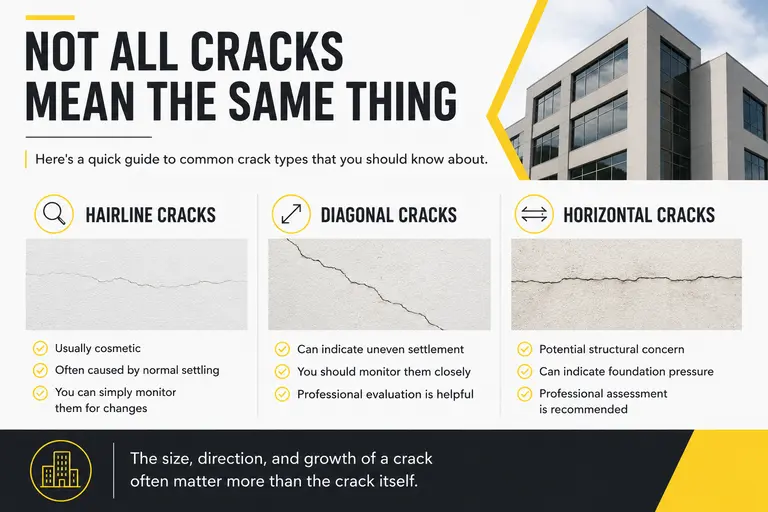
Now, not every wall crack indicates structural damage. Small hairline cracks can develop over time due to normal settling, temperature changes, or minor material shrinkage.
However, larger cracks deserve closer attention. This is especially true if you notice:
- Horizontal wall cracks
- Diagonal cracks extending from doors or windows
- Stair-step cracks in brick or masonry walls
- Cracks that continue growing over time
- Walls that appear bowed or leaning
- Gaps forming between walls and ceilings
After all, walls are one of the first places where structural movement becomes visible.
That’s because as foundations settle or structural components shift, stress can transfer throughout building components. Eventually, that stress can show up as cracking, separation, or visible distortion in walls and ceilings.
For instance, if you notice a growing gap where a wall meets the ceiling, that could be something beyond simple cosmetic damage.
Similarly, a bowing wall can indicate pressure from soil movement, foundation problems, or structural deterioration.
5. Visible signs of structural movement around the property
People ask me about when to hire a structural engineer urgently. And I always tell them to do so when they see signs of structural movement near the building.
You see, one of the biggest mistakes property owners make is focusing only on interior damage. But in reality, some of the most important warning signs are found outside the building.
Some common signs of structural movement outside houses and commercial buildings include:
- Separating brickwork
- Leaning chimneys
- Exterior wall cracks
- Gaps around windows and doors
- Visible foundation displacement
- Uneven exterior surfaces
- Separation between building components
For instance, you might notice a brick wall pulling away from another section of the structure. Also, there can be cracks forming repeatedly despite previous repairs.
Now, these signs don’t automatically mean a building is unsafe. However, they do indicate that movement is happening somewhere within the structural system.
In short, here’s when to hire a structural engineer in Texas:
| Warning Sign | What It Indicates | Engineer Needed? |
| Growing foundation cracks | Settlement, soil movement, foundation issues | Yes |
| Uneven or sagging floors | Structural movement, weakened supports | Yes |
| Sticking doors and windows | Shifting foundations or framing | Yes |
| Bowing walls or large cracks | Structural stress or movement | Yes |
| Exterior signs of movement | Foundation displacement or settlement | Yes |
How to tell if a house is structurally sound?
There isn’t a single sign that can answer that question. Instead, structural integrity is determined by evaluating the building as a whole.
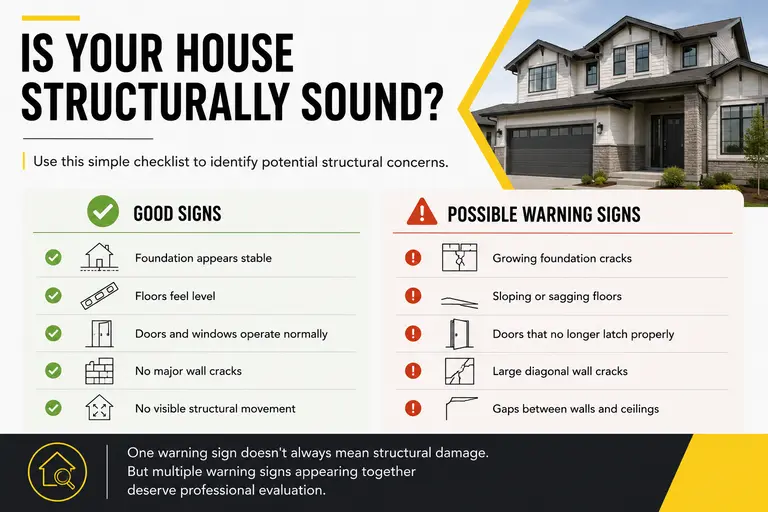
Generally speaking, a structurally sound building should have:
- Stable foundations
- Level floors
- Properly functioning doors and windows
- Minimal structural cracking
- No significant wall movement
- No signs of excessive settlement
- No visible structural deterioration
A visual inspection can often help you identify if your home is structurally sound or there are some warning signs.
However, many structural issues develop gradually and they aren’t immediately visible to an untrained eye.
This is why professional assessments are essential. For a structural engineer inspection cost of about $350 to $800, an engineer can evaluate your building, identify potential problems, and determine whether further action is needed.
Structural engineer vs contractor: Who should you call first?
Now that you know when to hire a structural engineer, you might be curious whether you should wait for structural engineering report or call a repair contractor right away.
More so if you’ve already noticed structural concerns and have a basic idea of what the repair is going to be like.
But let me tell you that although contractors play an important role, they don’t always provide the independent structural analysis needed to determine what’s actually causing the problem. That’s the structural engineer’s focus area, while a contractor focuses on repairs.

We help you identify structural concerns, navigate code compliance, and evaluate site risks with clarity.
Conclusion
I am sure that, by now, you have a much clearer understanding of when to hire a structural engineer and what warning signs should never be ignored.
And as you can see, structural issues don’t always begin with major damage.
In many cases, the earliest signs are relatively small. It can be a crack in the foundation, a sticking door, an uneven floor, or a gap between a wall and ceiling.
However, these seemingly minor issues can sometimes indicate larger structural concerns developing beneath the surface.
This is exactly why early structural evaluation is so important for the safety and overall wellbeing of building occupants.
Got more questions or want civil engineering services in Houston?
You can get in touch with us!
At Bullseye Engineering Inspection, we are seasoned local civil engineers. Our engineering and inspection services are backed by decades of expertise and experience.
FAQs about when to hire a structural engineer
When should I hire a structural engineer?
You should consider hiring a structural engineer when you notice signs of structural movement, foundation cracks, sagging floors, bowing walls, or other unusual changes in your property.
Structural engineers can evaluate the situation and determine whether structural repairs are necessary.
When do you need a structural engineer when buying a house?
A structural engineer can be helpful when purchasing a property that shows signs of foundation settlement, structural cracking, floor movement, water damage, or previous structural repairs. Their assessment can provide additional insight into the building’s condition.
How can I tell if my house is structurally sound?
A structurally sound house typically has stable foundations, level floors, properly functioning doors and windows, and minimal signs of structural movement.
If concerns exist, a professional structural assessment is the most reliable way to evaluate the property.
What are the most common signs of structural issues in a house?
Common warning signs include foundation cracks, wall cracks, uneven floors, sticking doors and windows, bowing walls, and visible signs of settlement or movement around the property.
Are cracks in walls always a structural problem?
Not always.
Many small hairline cracks are cosmetic and occur naturally as buildings age.
However, large, growing, horizontal, or stair-step cracks may indicate structural movement and should be evaluated by a professional.
What is a structural damage assessment?
A structural damage assessment is a professional evaluation of a building’s structural components. It helps identify potential issues, determine the cause of damage, and provide recommendations for repairs or further investigation.
Can foundation settlement cause structural damage?
Yes.
Major foundation settlement can affect walls, floors, roofs, doors, windows, and other structural components throughout a building. The severity depends on the amount of movement and underlying conditions.
Should I call a contractor or a structural engineer first?
If you’re unsure whether a structural problem exists, it’s often beneficial to start with a structural engineer. They can diagnose the issue and determine whether repairs are necessary before work begins.
What are signs of structural movement in houses?
Some common signs of structural problems include growing cracks, uneven floors, sticking doors and windows, gaps between walls and ceilings, exterior brick cracking, and visible foundation movement.