


When you’re buying or renovating a property, you do need to hire a property inspector. This is something you might already know.
But the biggest question you might have is whether you need a home inspector or a structural engineer.
You see, people assume they both do the same job, so they can hire either for due diligence and overall safely.
However, structural engineers and home inspectors serve very different purposes. A home inspector gives you an overall picture of a property’s condition, while a structural engineer focuses specifically on your building’s structural integrity.
Thankfully, it’s not as complicated as it sounds once you know the basic difference between a structural engineer vs home inspector.
In this blog, I’ll explain it all. You’ll know:
- What a structural engineer does
- What a home inspector does
- The difference between a structural engineer vs home inspector
- When to hire a home inspector
- When to hire a structural engineer
- Whether you need one or both
So, let’s get into it.
Key takeaways
- Home inspectors evaluate a property’s overall condition, while structural engineers assess its structural safety and stability.
- A home inspection can identify potential structural issues but doesn’t confirm their cause or severity.
- Structural engineers investigate foundation problems, structural movement, and load-bearing components in detail.
- Home inspections are often recommended when buying or selling a property.
- Structural engineers are typically hired when structural concerns are suspected or major renovations are planned.
- In some situations, you might need to hire both.
What is a structural engineer?

A structural engineer is a licensed engineering professional who evaluates the strength, stability, and safety of your building’s structural components.
Their primary responsibility is to determine whether the structure can safely support the loads placed upon it and identify any issues that could affect its structural integrity. This includes inspecting components like foundations, load-bearing walls, beams, columns, roof structures, floor systems, and structural framing.
If you notice signs of foundation problems, structural movement, or major cracking, a structural engineer can identify the cause of the problem and recommend the best solution.
We help you identify structural concerns, navigate code compliance, and evaluate site risks with clarity.

Bonus: Here’s what a structural engineer can do and what they can’t:
| What a structural engineer can do | What a structural engineer can’t do |
| Evaluate the structural safety of a building | Perform a full home inspection |
| Diagnose structural problems and their causes | Inspect plumbing, HVAC, or electrical systems in detail |
| Recommend structural repairs or modifications | Carry out the repair work themselves |
| Prepare engineering reports and calculations | Replace the role of a general home inspector |
What is a home inspector?

A home inspector performs a visual inspection of your property’s overall condition. Their goal is to identify visible defects, maintenance concerns, and potential safety issues before a maintenance cycle or before you buy or sell a home.
During a home inspection, inspectors assess major systems throughout the house, including the roof, plumbing, electrical, HVAC, insulation, windows, doors, and visible structural components.
Now, while a home inspector can identify signs that indicate structural issues, they don’t determine whether the building has a structural problem.
So, if they suspect structural concerns, they’ll recommend hiring a structural engineer for further assessment. This is one reason why structural engineer inspection cost is sometimes lower than regular home inspection.
Bonus: Here’s what a home inspector can do and what they can’t:
| What a home inspector can do | What a home inspector can’t do |
| Assess the property’s overall condition | Confirm whether a structural problem exists |
| Identify visible defects and maintenance issues | Diagnose the cause of structural movement |
| Recommend further evaluation when needed | Design structural repairs or modifications |
Structural engineer vs home inspector: What’s the difference?

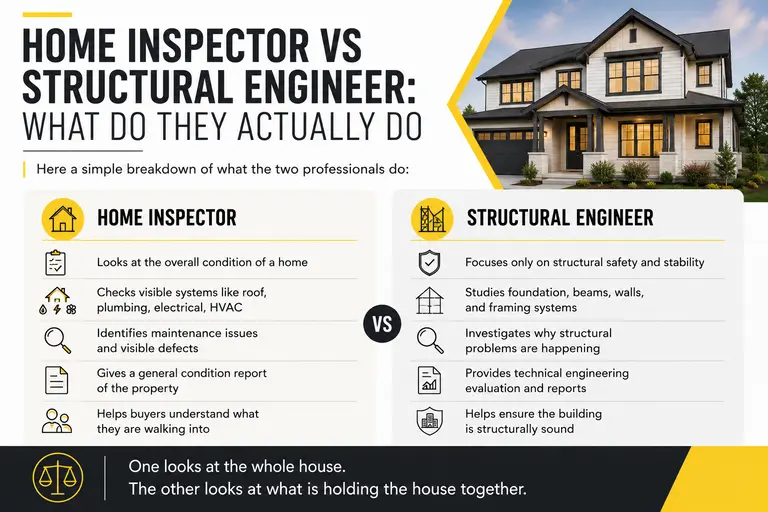
Now that you know what each professional does, let me compare the role of a structural engineer vs home inspector side by side.
Although both inspect buildings, their responsibilities are very different. And understanding these differences can help you hire the right professional the first time and avoid paying for an inspection you might not need.
1. Scope
A home inspector performs a broad visual inspection of your entire property. They examine multiple systems, including the roof, plumbing, electrical, HVAC, insulation, windows, doors, and visible structural components.
A structural engineer, on the other hand, has a much narrower scope. Their inspection focuses specifically on your building’s structural system and whether it is safe, stable, and performing as intended.
2. Focus
The primary goal of a home inspection is to identify visible defects, maintenance concerns, and potential safety issues throughout your property.
A structural engineer has a different focus. Rather than inspecting the entire home, they investigate structural movement, foundation performance, load-bearing components, and other issues that could affect your building’s structural integrity.
3. Report
After completing an inspection, you’ll receive a home inspection report that summarizes your property’s overall condition and highlights areas that might need repairs, maintenance, or further evaluation.
A structural engineer prepares a much more detailed report focused on structural concerns. It explains the likely cause of the issue, whether repairs are needed, and might also include engineering recommendations that contractors can use during repairs.
4. Repairs
Neither a home inspector nor a structural engineer typically performs repair work.
The difference is that a home inspector identifies visible concerns, while a structural engineer determines what is causing the structural problem and recommends the appropriate repair.
Once the issue has been diagnosed, a qualified contractor carries out the actual repairs.
5. Who hires them
Home inspectors are most commonly hired by buyers before purchasing a property. Also, sellers might hire one before listing their home to identify issues that could affect the sale.
Structural engineers are usually hired by homeowners, property buyers, contractors, insurance companies, or even home inspectors when there are concerns about a building’s structural condition.
In short, here are all the differences between a structural engineer vs home inspector:
| Factor | Home Inspector | Structural Engineer |
|---|---|---|
| Scope | Evaluates the property’s overall condition | Evaluates the building’s structural system |
| Focus | Identifies visible defects and maintenance concerns | Diagnoses structural problems and their causes |
| Report | Provides a general home inspection report | Provides a detailed structural engineering report |
| Repairs | Identifies issues but doesn’t recommend structural repairs | Recommends structural repairs but doesn’t perform them |
| Who hires them | Homebuyers, sellers, and homeowners | Homeowners, buyers, contractors, insurance companies, and home inspectors |
When to hire a home inspector?
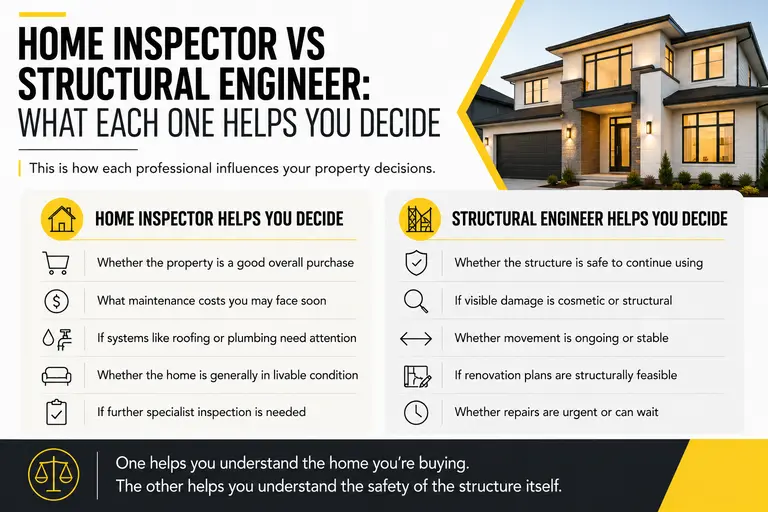
You should hire a home inspector anytime you want a complete picture of your property’s overall condition.
Home inspections are most commonly performed before buying a house, but they’re also useful before selling a property or as part of routine home maintenance.
However, it’s important you know that a home inspection is primarily a visual assessment. And if the inspector notices signs of structural movement or foundation concerns, they’ll recommend a structural engineer for a more detailed evaluation.
When to hire a structural engineer?
If you’re curious when to hire a structural engineer, you should do so anytime you notice signs of structural problems. Also, you should hire an engineer when you are planning changes that can affect your building’s stability.
For instance, you might need a structural engineer if you notice foundation cracks, sagging floors, bowing walls, or doors and windows that suddenly become difficult to open.
You should also hire one before removing a load-bearing wall, adding a second story, or assessing damage caused by storms, fire, or long-term settlement.
A structural engineer can determine the root cause of a problem and recommend the safest path forward.

Can a home inspector identify structural issues?
Yes, a home inspector can identify signs that indicate structural issues. In fact, during a home inspection, they do look for visible warning signs such as foundation cracks, uneven floors, bowing walls, sticking doors and windows, or gaps around walls and ceilings.
However, a home inspector can’t determine whether these signs are caused by a structural problem or how serious the issue might be. That’s because a home inspection is a visual assessment, not an engineering evaluation.
If structural concerns are suspected, the inspector will recommend hiring a structural engineer for a more detailed inspection.
We help you identify structural concerns, navigate code compliance, and evaluate site risks with clarity.
Conclusion
I am sure that, by now, you have a good understanding of the difference between a structural engineer vs home inspector and when you should hire each one.
As you can see, both professionals play an important role, but they serve different purposes. A home inspector gives you an overall picture of your property’s condition, while a structural engineer focuses specifically on the safety and stability of your building’s structural system.
So, if you’re buying a home or simply want a general assessment, a home inspection is the right place to start. However, if you notice signs of structural movement or are planning major structural changes, hiring a structural engineer will give you the answers you need before moving forward.
Got more questions or need civil engineering in Houston, TX?
You can get in touch with us!
At Bullseye Engineering Inspection, we help homeowners, property buyers, and commercial property owners make informed decisions through professional civil engineering services.
FAQs about structural engineer vs home inspector
Do I need a structural engineer or a home inspector?
It depends on your situation.
If you want an overall assessment of a property’s condition, a home inspector is usually the right choice.
However, if you suspect structural problems like foundation settlement, sagging floors, or large cracks, a structural engineer can provide a more detailed evaluation.
Can a home inspector tell if a house has foundation problems?
A home inspector can identify visible signs that might indicate foundation issues, such as cracks, uneven floors, or sticking doors and windows.
However, they don’t diagnose the cause of the problem. If foundation concerns are suspected, they’ll often recommend a structural engineer for further evaluation.
When should I hire a structural engineer?
You should hire a structural engineer when you notice signs of structural movement, foundation cracks, bowing walls, and sagging floors. Also you should hire one when planning renovations that involve structural changes, such as removing a load-bearing wall or adding another level to your home.
Is a structural inspection the same as a home inspection?
No. A home inspection evaluates the property’s overall condition, including roofing, plumbing, electrical, HVAC, and other major systems.
A structural inspection focuses specifically on the building’s structural components, such as the foundation, framing, beams, and load-bearing walls.
Can a structural engineer perform a home inspection?
A structural engineer can inspect a property’s structural components, but they don’t typically perform a standard home inspection. Home inspectors and structural engineers have different areas of expertise and serve different purposes.
Who should I call first if I notice structural issues?
If you’ve noticed warning signs like growing foundation cracks, sagging floors, or bowing walls, it’s often best to start with a structural engineer. They can determine whether a structural problem exists and recommend the appropriate repairs before any work begins.
What are the most common structural issues found during a home inspection?
Some of the most common home inspection structural issues include foundation cracks, uneven or sloping floors, wall cracks, sticking doors and windows, roof framing concerns, and signs of settlement.
While a home inspector can identify these warning signs, a structural engineer can determine whether they’re cosmetic or structural.
Is hiring both a home inspector and a structural engineer worth it?
In many cases, yes.
A home inspector provides a broad overview of the property’s condition, while a structural engineer offers an in-depth evaluation of structural concerns.
Hiring both can give you a more complete understanding of the property’s condition, especially if structural issues are suspected.