
When it comes to planning a construction project, most property owners and developers focus on the building itself. They think about site design, materials, permits, utilities, and construction schedules.
But there is one more thing that can significantly affect a project: The public right of way.
Whether you are building a commercial property, developing a new subdivision, or improving an existing site, the right of way can affect things like:
- Where you build
- How you access the property
- Where utilities are installed
- What permits you need before construction begins
For starters, a public right of way refers to areas reserved for public use, such as roads, sidewalks, utility corridors, and other transportation-related spaces. These areas are managed by public agencies and come with specific requirements that property owners and contractors must follow.
In this blog, I will explain how right of way affects construction work in Texas in detail. You’ll know:
- What is right of way
- Who owns a right of way in Texas
- How right of way affects construction projects
- What is ROW encroachment
- Whether you can build on a right of way
- And much more
So, let’s get into it.
Key takeaways
- Public right of way refers to areas used for public transportation, utilities, and access.
- A right of way does not always mean the government owns the land; it can also involve easement rights.
- Construction activities within ROW require permits and approval from local authorities.
- Building structures or placing private improvements in public right of way can create encroachment issues.
- Identifying ROW requirements early helps prevent construction delays and unexpected costs.
- Contractors and developers should review ROW limitations before finalizing site plans.
What is a public right of way in Texas?

For starters, a public right of way is an area that has been designated for public use and access. This is the space that allows the public to travel, access utilities, or use certain infrastructure.
In Texas, public rights of way commonly include areas used for:
- Public streets and roads
- Sidewalks
- Drainage systems
- Utility lines
- Transit facilities
- Other public infrastructure
The exact boundaries of a right of way depend on the location and how the property was developed.
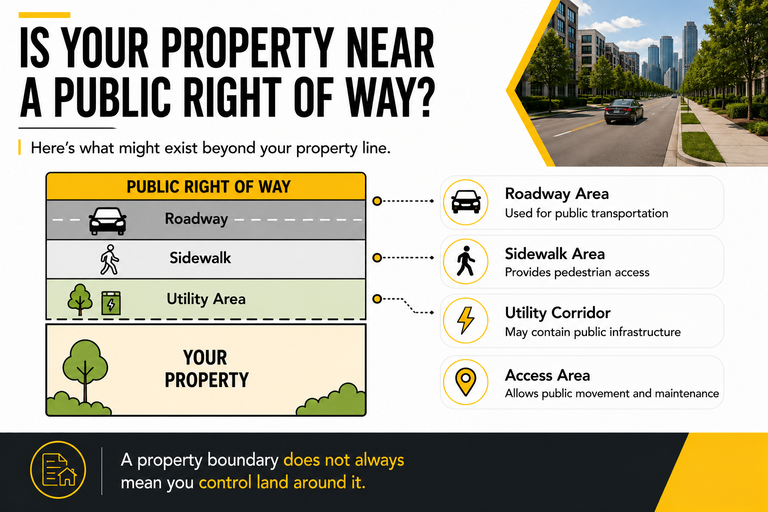
For instance, a city street might include much more than just the paved roadway. Here, the right of way can extend beyond the edge of the pavement and include areas for sidewalks, utility lines, drainage, future road improvements, or maintenance access.
Now, it is important you understand that a right of way is not the same thing as private property. You might own land near or around a right of way, but the public agency will certain rights to use that area for transportation, utilities, or public access.
Simply put, a public right of way creates limitations on civil engineering work in that area.
We help you identify structural concerns, navigate code compliance, and evaluate site risks with clarity.

Is public right of way the same as property right of way?
Np, they’re both different things.
A public right of way is created for public use, such as roads, sidewalks, and utilities.
A property right of way refers to a private easement that gives one property owner the legal right to access or use part of another property.
For instance:
- A shared driveway between two properties may involve a private right of way.
- A city street running along a commercial property is part of a public right of way.
Here is a simple comparison:
| Type | What it means |
| Public right of way | Area reserved for public access, transportation, or utilities |
| Private right of way | Legal access or use rights between private property owners |
Who owns a public right of way in Texas?
In most cases, the land itself is owned by a private property owner, but the public agency has rights to use and manage that area.
In other situations, the city, county, or state directly owns the property where the right of way exists.
Who exactly owns the right of way on property depends on:
- How the land was originally dedicated
- Property records
- Easement agreements
- Local regulations
- Whether the area was acquired for public use
Now, if you’re planning construction work, you should know that even if you own the underlying land, there will still be restrictions on what can be built within the right of way..
For instance, in Houston, placing a permanent structure, fence, sign, or other improvement inside a public right of way will require approval or might not be allowed at all. Here, the Department of Planning and Development checks subdivision plans for adequate streets or right of way.
How does public right of way affect construction projects?
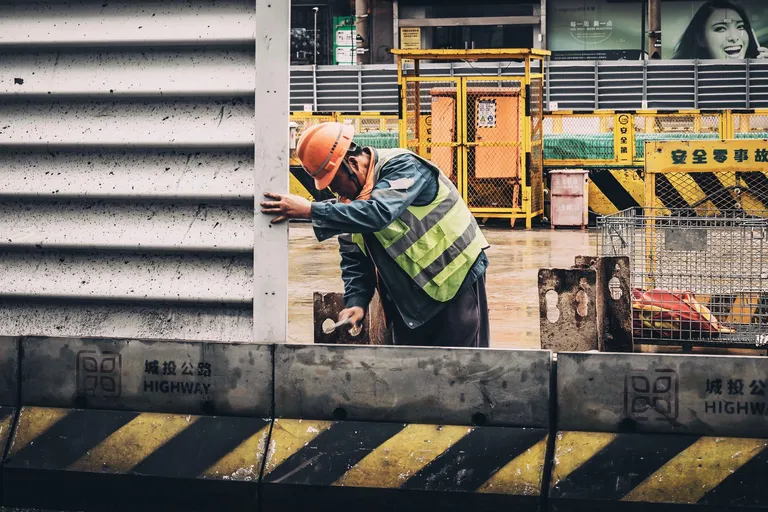
Public right of way can have a major impact on construction projects, especially commercial developments in Texas.
You see, builders and property owners focus on what happens inside the property boundaries. However, construction activities do interact with areas outside the property, including streets, sidewalks, utility corridors, and access points.
This is where right of way requirements become important.
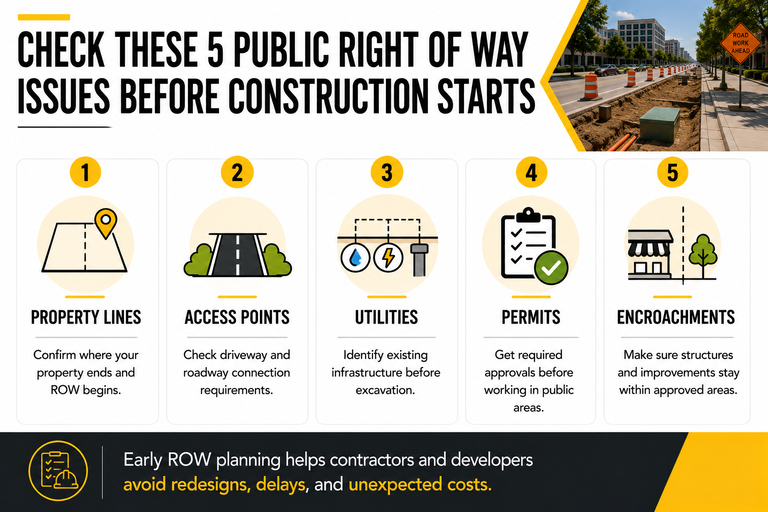
If your project is near a right of way, it might need approval before making changes that affect public areas. For instance, you might need approval before modifying a driveway connection, installing utilities, closing a lane, or placing construction equipment near a roadway.
Overall, here are some common ways public right of way affects construction across Texas:
| Impact | How it Affects Construction Work |
| Site access | Driveways and entrances might require approval from local authorities |
| Utilities | Water, sewer, electrical, and communication lines often use right of way areas, affecting MEP engineering plans |
| Construction activities | Work near public areas might require permits and extra safety measures |
| Project design | Right of way restrictions can affect building layouts and site plans |
| Future improvements | Reserved right of way space might limit where structures can be placed |
What is right of way construction?
Right of way construction refers to construction activities that take place within or affect a public right of way.
Unlike normal construction that happens entirely within private property boundaries, right of way construction involves areas that are used or controlled for public purposes.
Some common examples of right of way construction include:
- Installing underground utilities
- Building sidewalks
- Improving road access
- Adding turn lanes
- Repairing streets
- Installing drainage improvements
- Connecting a new development to existing infrastructure
Here, construction work requires coordination with local authorities because these areas serve the public.
Do you need a public right of way permit for construction around ROW?
In many cases, yes.
A public right of way permit is required when construction activities impact public areas.
Although the exact requirements depend on the city, county, and type of work being done, you might need permits for:
- Excavating within a roadway
- Installing or relocating utilities
- Closing sidewalks or traffic lanes
- Placing construction materials in public areas
- Modifying driveway access
- Performing work near public infrastructure
The purpose of these permits is not just administrative. They help local agencies review the proposed work, protect public safety, coordinate with utility providers, and ensure the project meets local standards.
What is ROW encroachment?
A ROW or right of way encroachment happens when a private construction extends into a public right of way without proper approval.
Simply put, something that does not belong in the public right of way has been built there. This can include:
- Fences extending into public areas
- Signs placed within sidewalk areas
- Landscaping blocking public access
- Structures built too close to roadway areas
- Construction materials stored within public ROW
- Private utility installations without approval
You see, even though some encroachments seem minor, they can create problems.
For instance, an improperly placed fence can restrict sidewalk access. Similarly, construction materials left in a public area can create safety hazards.
This is why authorities regulate encroachments quite strictly.
For instance, the Texas Transportation Code sections 472.012, 472.013, and 472.014 allows the Texas Department of Transportation to remove personal property without the owner’s consent. Also, the department can recover the costs of removal and disposition from the owner.
We help you identify structural concerns, navigate code compliance, and evaluate site risks with clarity.
Can you build on a right of way?
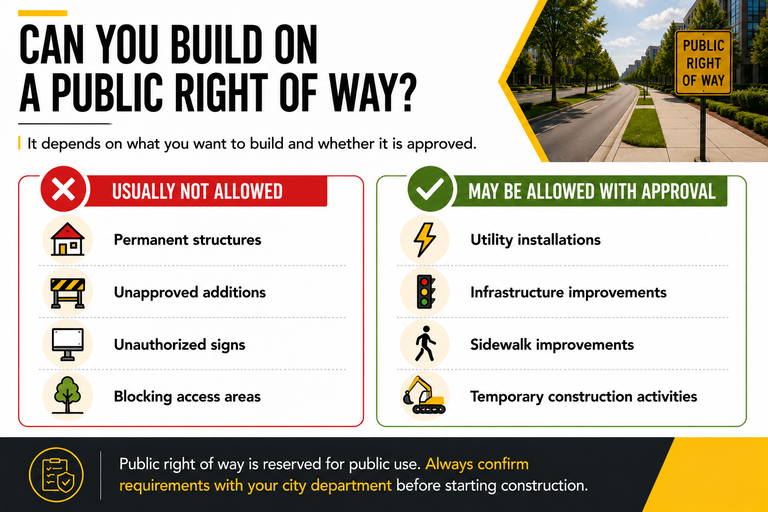
A public right of way is reserved for public use. And private construction activities are restricted unless they are specifically allowed and properly permitted.
For instance, as a property owner you cannot place a permanent structure, building addition, or other private improvement within a public right of way without authorization.
However, some uses might be allowed depending on your local regulations, such as:
- Approved utility installations
- Permitted signage
- Certain landscaping improvements
- Temporary construction activities
Bonus: Here’s how to avoid right of way issues during construction
| Step | Benefit |
| Review property surveys | Helps identify ROW boundaries and restrictions |
| Check local requirements | Ensures permits and approvals are obtained early |
| Coordinate with utility providers | Prevents conflicts with existing infrastructure |
| Work with experienced professionals | Helps address design and compliance issues |
Conclusion
I am sure that, by now, you have a clear understanding of what public right of way is and how it can affect construction projects in Texas.
As you can see, a right of way is much more than just a roadway or sidewalk. It plays an important role in transportation, utilities, public access, and community infrastructure.
So, if you’re a contractor, developer, or property owner, I suggest you understand your local ROW requirements before construction. This will help prevent permit issues, redesigns, and costly project delays.
Got more questions or looking for engineering services in Houston?
You can get in touch with us!
At Bullseye Engineering Inspection, our engineering and inspection services are backed by decades of local expertise and experience.
From civil engineering and traffic impact studies to commercial property inspections, we help developers, investors, contractors, and property owners make informed decisions throughout the development process.
FAQs about public right of way
What is a public right of way?
A public right of way is an area designated for public use, such as roads, sidewalks, utilities, and other infrastructure. It allows the public and service providers to access and use these areas while giving local agencies the ability to manage and maintain them.
Who owns a public right of way in Texas?
Ownership of a public right of way depends on how the area was established.
In some cases, a city, county, or state might own the land. In other cases, a private property owner might still own the underlying land while the public agency has rights to use and manage the area.
Can you build on a right of way?
Generally speaking, private construction is not allowed within a public right of way without proper approval.
Some minor activities can be permitted depending on local regulations, but permanent structures or improvements require review and authorization from the appropriate authority.
What is ROW encroachment?
ROW encroachment occurs when a private improvement or activity extends into a public right of way without approval.
Examples include fences, signs, structures, landscaping, or construction materials placed within areas reserved for public use.
Do you need a public right of way permit for construction?
A public right of way permit can be required when construction affects public areas such as streets, sidewalks, utilities, or access points.
The exact requirements depend on the location in Texas and type of work. Contractors should check with their local authorities before beginning any activity that impacts public right of way.